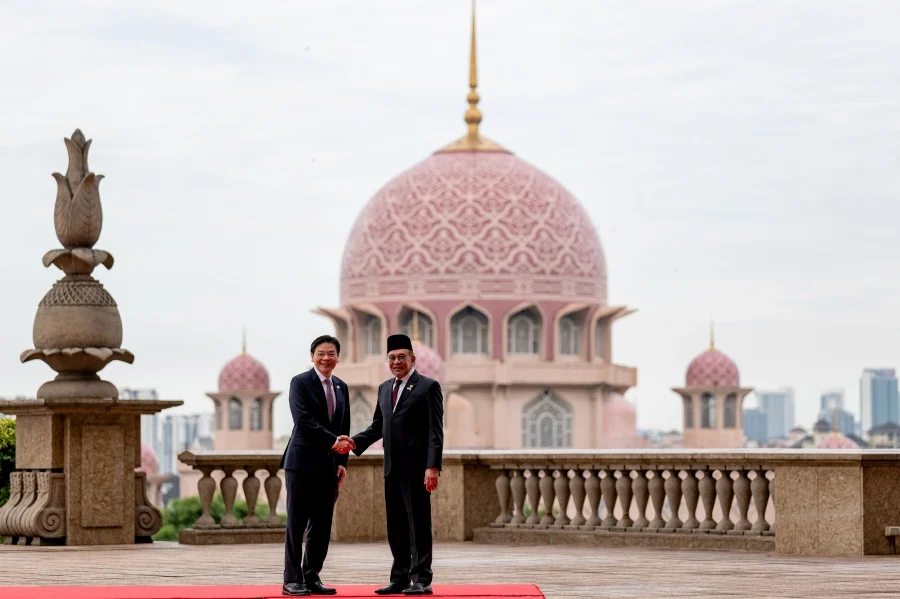
Malaysia and Singapore kicked off the much-awaited Johor-Singapore Special Economic Zone (JS-SEZ) today. Here’s what you need to know:
Malaysia and Singapore signed a memorandum of understanding on January 11, 2024 to work on the plans for the JS-SEZ.
Almost a year later, Malaysia’s Minister of Economy, Rafizi Ramli and Singapore’s Deputy Prime Minister and Minister for Trade and Industry, Gan Kim Yong signed a agreement on the economic zone on Jan 6, 2025.
The agreement is not final yet and is expected to be made official by the third quarter of 2025.
The Malaysian and Singapore governments have committed to attracting 100 projects in 10 years to the economic zone, with the intent of creating 20,000 skilled job opportunities in the JS-SEZ.
Malaysia and Singapore will promote and facilitate investments in 11 economic sectors from third countries and Singapore companies expanding into the JS-SEZ.
Facilitate development of renewable energy (RE) projects to accelerate RE trading between Malaysia and Singapore.
The two countries will also cooperate on movement of people and goods; talent development and ease of doing business.
The zone's flagship areas
The economic zone, which spans 357,128 hectares, covers the Iskandar development region and three additional areas.
JS-SEZ will be made up of Johor Bahru City Centre, Iskandar Puteri, Tanjung Pelepas-Tanjung Bin, Pasir Gudang, Senai-Skudai and Sedenak, Forest City, Pengerang Integrated Petroleum Complex and Desaru.
Known as flagship zones, each area will champion projects from different vital sectors of the economy:
- Johor Bahru City Centre: business services, digital economy and health
- Iskandar Puteri: manufacturing, business services, digital economy, education, health and tourism
- Tg Pelepas-Tg Bin, Pasir Gudang and PIPC: manufacturing, energy and logistics
- Senai-Skudai: manufacturing, digital economy, education, logistics and tourism
- Forest City: financial services, as it serves as a special financial zone
- Sedenak: the most sectors of any zone – manufacturing, business services, digital economy, education, energy, food security, health, logistics and tourism
- Desaru: education, food security, health and tourism
Besides the sectors mentioned, the JS-SEZ also covers new priority sectors such as aerospace, electrical and electronics, chemical, medical devices and pharmaceuticals.
Fiscal incentives on offer
Economy Minister Rafizi Ramli said both countries’ approach with regards to the incentive structure will be driven by “sheer potential” of the JS-SEZ in terms of geographical location.
Singapore and Malaysia will design the fiscal incentives separately.
Among the incentives on offer by Malaysia include special corporate tax and personal income tax rate for companies that undertake new investments in high growth, and high value-added activities within the JS-SEZ.
The Malaysian government will establish a fund for purposes of infrastructure support for the economic zone.
The Singapore government will design funding support to facilitate the expansion of Singaporean companies in the economic zone.
Malaysia will establish the Invest Malaysia Facilitation Centre – Johor (IMFC-J) to act as a one-stop centre in facilitating investments and businesses in the JS-SEZ.
Source: https://www.nst.com.my/business/economy/2025/01/1157600/updated-everything-you-need-know-about-johor-singapore-special
![[Policies’ Update] Malaysia’s Newest Expatriate Employment Policies!](https://mypvip.com/wp-content/uploads/2026/04/employment_policy.jpg)